您现在的位置:
下载说明书
Functions as a cell surface receptor and performs physiological functions on the surface of neurons relevant to neurite growth, neuronal adhesion and axonogenesis. Interaction between APP molecules on neighboring cells promotes synaptogenesis. Involved in cell mobility and transcription regulation through protein-protein interactions. Can promote transcription activation through binding to APBB1-KAT5 and inhibits Notch signaling through interaction with Numb. Couples to apoptosis-inducing pathways such as those mediated by G(O) and JIP. Inhibits G(o) alpha ATPase activity (By similarity). Acts as a kinesin I membrane receptor, mediating the axonal transport of beta-secretase and presenilin 1 (By similarity). By acting as a kinesin I membrane receptor, plays a role in axonal anterograde transport of cargo towards synapes in axons. Involved in copper homeostasis/oxidative stress through copper ion reduction. In vitro, copper-metallated APP induces neuronal death directly or is potentiated through Cu(2+)-mediated low-density lipoprotein oxidation. Can regulate neurite outgrowth through binding to components of the extracellular matrix such as heparin and collagen I and IV. The splice isoforms that contain the BPTI domain possess protease inhibitor activity. Induces a AGER-dependent pathway that involves activation of p38 MAPK, resulting in internalization of amyloid-beta peptide and leading to mitochondrial dysfunction in cultured cortical neurons. Provides Cu(2+) ions for GPC1 which are required for release of nitric oxide (NO) and subsequent degradation of the heparan sulfate chains on GPC1.
Amyloid-beta peptides are lipophilic metal chelators with metal-reducing activity. Bind transient metals such as copper, zinc and iron. In vitro, can reduce Cu(2+) and Fe(3+) to Cu(+) and Fe(2+), respectively. Amyloid-beta protein 42 is a more effective reductant than amyloid-beta protein 40. Amyloid-beta peptides bind to lipoproteins and apolipoproteins E and J in the CSF and to HDL particles in plasma, inhibiting metal-catalyzed oxidation of lipoproteins. APP42-beta may activate mononuclear phagocytes in the brain and elicit inflammatory responses. Promotes both tau aggregation and TPK II-mediated phosphorylation. Interaction with overexpressed HADH2 leads to oxidative stress and neurotoxicity. Also binds GPC1 in lipid rafts.
Appicans elicit adhesion of neural cells to the extracellular matrix and may regulate neurite outgrowth in the brain.
The gamma-CTF peptides as well as the caspase-cleaved peptides, including C31, are potent enhancers of neuronal apoptosis.
N-APP binds TNFRSF21 triggering caspase activation and degeneration of both neuronal cell bodies (via caspase-3) and axons (via caspase-6).
Description
Rabbit polyclonal antibody to APP
Applications
WB, IF, ICC, IHC.
Immunogen
APP Antibody detects endogenous levels of total APP.
Reactivity
Human, Mouse, Rat.
可预测:Pig(100%), Horse(%), Chicken(%), Xenopus(%)
Molecular weight
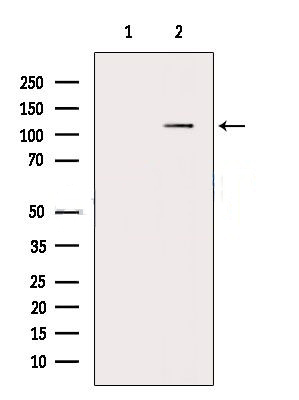
117kDa; 87kD(Calculated).
Host species
Rabbit
Ig class
Immunogen-specific rabbit IgG
Purification
Antigen affinity purification
Full name
APP
Synonyms
A4_HUMAN; AAA; ABETA; ABPP; AD1; AICD-50; AICD-57; AICD-59; AID(50); AID(57); AID(59); Alzheimer disease amyloid protein; amyloid beta A4 protein; Amyloid intracellular domain 50; Amyloid intracellular domain 57; Amyloid intracellular domain 59; amyloid of aging and alzheimer disease; APP; APPI; beta-amyloid peptide; Beta-APP40; Beta-APP42; C31; Cerebral vascular amyloid peptide; CTFgamma; CVAP; Gamma-CTF(50); Gamma-CTF(57); Gamma-CTF(59); peptidase nexin-II; PN-II; PreA4; Protease nexin-II; S-APP-alpha; S-APP-beta;
Storage
Rabbit IgG in phosphate buffered saline , pH 7.4, 150mM NaCl, 0.02% sodium azide and 50% glycerol. Store at -20 °C. Stable for 12 months from date of receipt.
Swissprot
P05067

Western blot analysis of extracts from Mouse brain, using APP Antibody. The lane on the left was treated with blocking peptide....
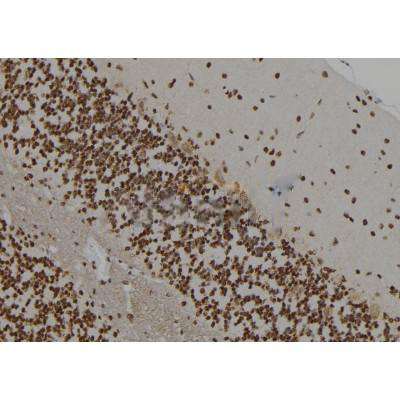
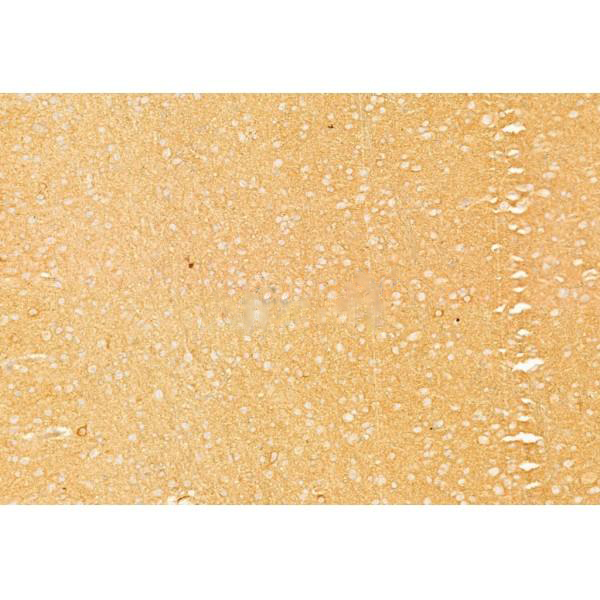
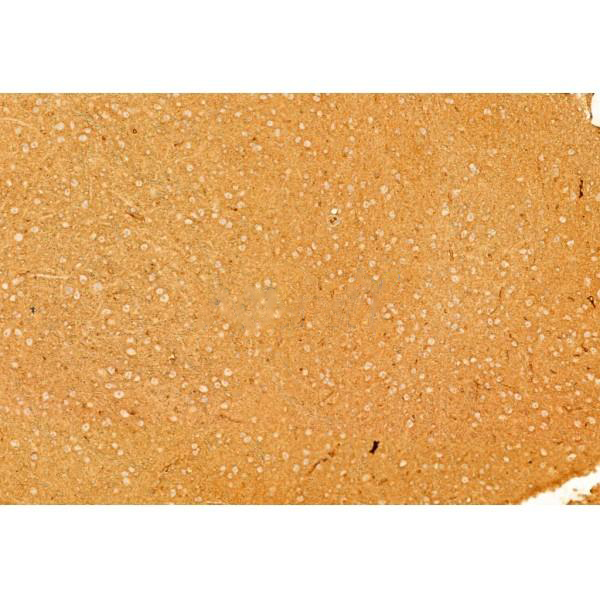
ab11325 at 1/100 staining Rat brain tissue by IHC-P. The sample was formaldehyde fixed and a heat mediated antigen retrieval step in citrate buffer was performed. The sample was then blocked and incubated with the primary antibody at 4°C overnight. An HRP conjugated anti-Rabbit antibody was used as the secondary antibody....
ab11325 at 1/100 staining Mouse brain tissue by IHC-P. The sample was formaldehyde fixed and a heat mediated antigen retrieval step in citrate buffer was performed. The sample was then blocked and incubated with the primary antibody at 4°C overnight. An HRP conjugated anti-Rabbit antibody was used as the secondary antibody....
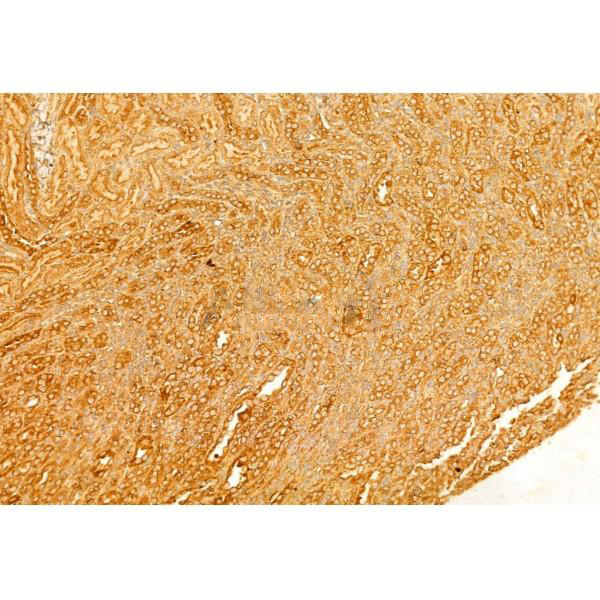
ab11325 at 1/100 staining Rat kidney tissue by IHC-P. The sample was formaldehyde fixed and a heat mediated antigen retrieval step in citrate buffer was performed. The sample was then blocked and incubated with the primary antibody at 4°C overnight. An HRP conjugated anti-Rabbit antibody was used as the secondary antibody....
ab11325 at 1/100 staining Rat brain tissue by IHC-P. The sample was formaldehyde fixed and a heat mediated antigen retrieval step in citrate buffer was performed. The sample was then blocked and incubated with the antibody for 1.5 hours at 22°C. An HRP conjugated goat anti-rabbit antibody was used as the secondary antibody....
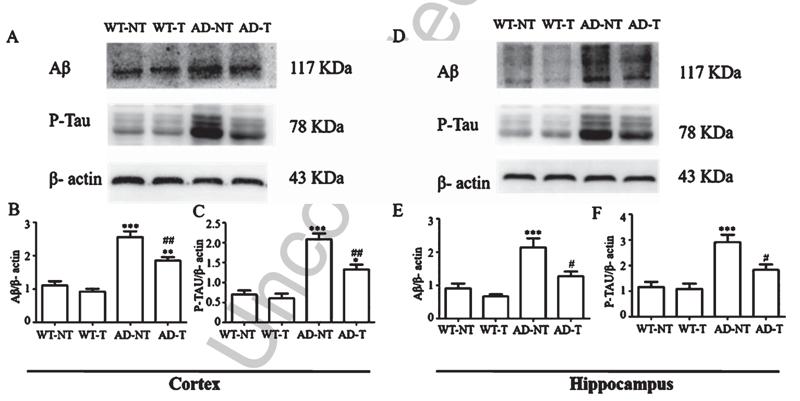
Fig. 1. The expression A and P-Tau. Representative immunoblots of A and P-Tau in the cortex (A-C) and hippocampus (D-F) in each group. Protein immunoreactivity was normalized to -actin. Individual data are presented as the mean ± S.E.M. from four individual mice in each group....
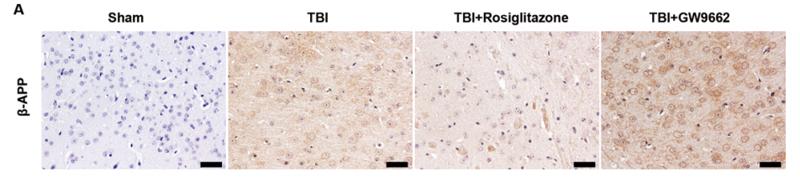
Fig. 2:| Immunohistochemical staining for beta-amyloid precursor protein (β-APP) in cerebral cortex after TBI in mice (A). Scale bar = 20 μm. Immunoreactivity for β-APP determined by average optical density (AOD), was attenuated by rosiglitazone and enhanced by GW992 (B). * p < 0.05, ** p < 0.01....
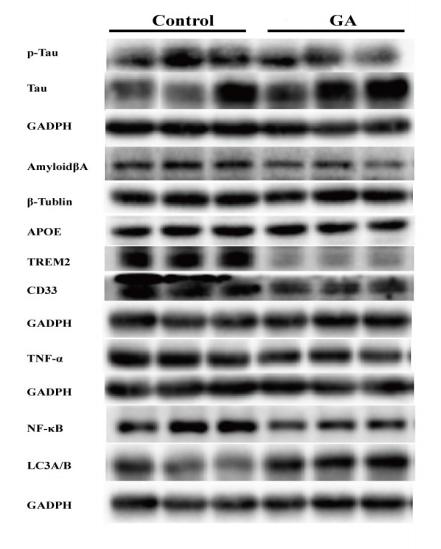
FIGURE 9 | Ameliorate effects of Ganodenic acid A by regulating sphingolipid metabolism in 3 × Tg-AD mice. (A) Experimental procedure in 3 × Tg-AD mice;(B) The AD biomarkers of p-Tau, Aβ, APOE, TREM2, CD33, the inflammatory cytokines of TNF-α and NF-κB p65 and the autophagy level of LC3A/B were measured in brain tissues...
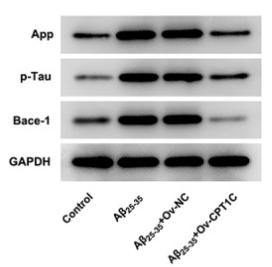
Figure 5. CPT1C overexpression decreased the deposition of AD marker proteins in Aβ25-35-induced HT22 cells. Following transfection of Ov-CPT1C or Ov-NC for 24 h, HT22 cells were treated with Aβ25–35 for another 24 h (a) The mRNA expressions of App, p-Tau and Bace-1 were evaluated using RT-qPCR. (b) The protein expressions of App, p-Tau and Bace-1 were evaluated using western blot. ***P < 0.001 vs. Control group, ###P < 0.001 vs Aβ25-35 + Ov-NC....
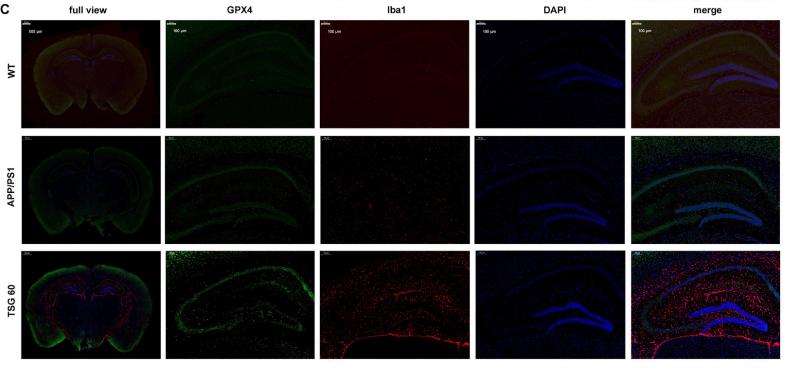
Fig. 8. TSG regulates the ferroptosis in various glial cells in APP/PS1 and WT mouse brains. Western blotting assay was performed to detect the expression of related proteins. (A) The protein expression levels of GPX4, GPX1, FTH1, xCT, CD98, DMT1, ACSL4, NCOA4, Ferritin Light Chain and Ferritin Heavy Chain were assessed. The levels were normalized to β-actin. (B) GPX4, GFAP and DAPI fluorescence staining co-localization of WT, APP/PS1 and TSG 60 mg/kg group. (C) GPX4, Iba1 and DAPI fluorescence staining co-localization of WT, APP/PS1 and TSG 60 mg/kg group. P# < 0.05, P## < 0.01, P### < 0.001 vs WT group. P* < 0.05, P** < 0.01, P*** < 0.001 vs APP/PS1 group. 2×, 100 × magnification, scare bar: 500 and 100 μm, n = 5/group....
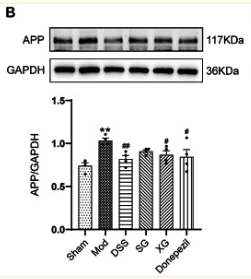
Fig. 7. DSS, SG, and XG increased the expression of PSD-95 and decreased the expression of APP and p-Tau in Aβ1−42-injected Mice. (A–C) PSD-95, APP, and p-Tau were detected by western blot. Full-length blots are presented in Supplementary Fig. 1. Data are presented as mean ± SEM, (n = 4); *P ...

Copyright © 北京嘉美诺斯生物科技有限公司 2009. All rights reserved
备案号:湘ICP备2025088722号-1